
Antifolk Before the World Caught On
My 1988 dispatch from New York City’s Lower East Side, where a ragtag group of artists were reinventing folk in the wake of punk — and sparking generational debates that still rage on.

Questions about originality and tradition in songwriting have been part of popular music for as long as popular music has existed. The New York Times’ recent list of the “30 greatest living American songwriters” prompted some strong reactions — including one of my own. The hubbub reminded me how every generation wrestles with the same issues: older ones convinced that newcomers don’t appreciate what came before, and younger ones equally convinced that they’re seeing the world in ways their predecessors missed. I’m often amused by the arguments because I’ve lived long enough to have occupied both camps, and I still remember the thrill of believing we were creating entirely new musical languages.
Back in 1988, still in my twenties, I was hanging around New York’s Lower East Side with a ragtag group of musicians and other artists who called themselves “antifolkies.” They thought they were redefining folk music. And they were. In a way. Youth has always depended on a certain measure of arrogance: the conviction that you’re hearing something nobody else has heard before and asking questions nobody else has thought to ask. It’s a rite of passage to tear down your heroes and rebuild on your own terms. The antifolkies were doing it then, just as punk rockers, rappers, folk revivalists, and countless others had done before. And it’s what younger songwriters working in new forms are doing now.
The antifolkies, led by the one-named singer-songwriter Lach — along with Roger Manning, Cindy Lee Berryhill, Kirk Kelly, Michelle Shocked, and a handful of others — were reimagining what folk music could be in the wake of punk. Instead of holding hands and singing “Kumbaya,” they were drawing as much inspiration from The Ramones as they were from Bob Dylan, Joan Baez, Phil Ochs, and Odetta.
I wrote about the antifolk collective for Option magazine before the movement began attracting attention from bigger, more mainstream outlets like the Times. Back then, nobody knew whether this was the beginning of something new or just another footnote in New York’s endless cycle of musical subcultures. But over the next two decades — and hundreds of weekends of open-mic nights — artists such as John S. Hall’s King Missile, Regina Spektor, Beck, Jeffrey Lewis, and Kimya Dawson’s Moldy Peaches would emerge from the scene. And antifolk would spread well beyond the Lower East Side, inspiring scenes in Britain, spawning documentaries and websites, and proving that what initially seemed like just another local rebellion had a surprisingly long afterlife.
Reported 38 years ago this month, the following story is a snapshot of antifolk before the rest of the world caught on. It appeared in the November 1988 issue of Option.
Folk You!
Michelle Shocked and the NYC antifolk scene
By Mark Kemp
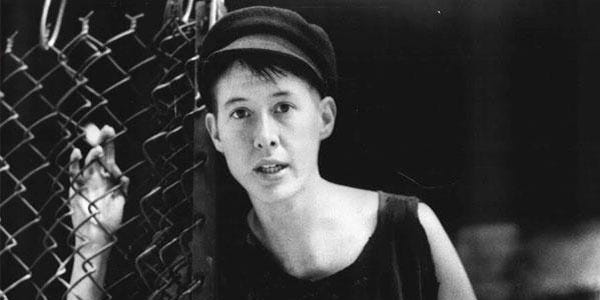
On a Friday evening in June, Michelle Shocked threads her way through the crowds on Canal Street. She’s wearing a faded black sleeveless T-shirt, black jeans, black Converse Chucks, and a black cap. A boyish-looking woman whose close-cropped hair is as black as the clothes she wears, Shocked is in town to do a benefit concert for the homeless, and to finish some last-minute promotional work for her second album, Short Sharp Shocked.
Onstage, Shocked appears much the same, but her music might not sound like what you’d expect. She sits casually with her legs apart, a Yamaha acoustic strapped to her chest, and picks and sings traditional, yet vibrant folk songs about traveling — of quiet nights in Amsterdam, Texas, or San Francisco; of conversations with old sailors; and of rich hobo hitchhikers. On “The Incomplete Image,” from her 1986 debut The Texas Campfire Tapes, she meanders a cappella through each verse in a talking-blues style, then fingerpicks the melodies between each verse. Released on England’s fledgling Cooking Vinyl label, The Campfire Tapes was recorded spontaneously on a Sony Walkman as Shocked sang her tunes literally beside a campfire at the Kerrville Folk Festival in Texas. On her latest LP, she throws a few curves, packing everything onto the record from a fat jug-band sound to R&B, a smidgen of jazz, and, yes, even the sort of hardcore slam-bang you’d expect from this woman in black: “Fogtown,” which isn’t listed on the cover, is a punky remake of a tune from Campfire Tapes, originally done softly and rhythmically with just her acoustic guitar.
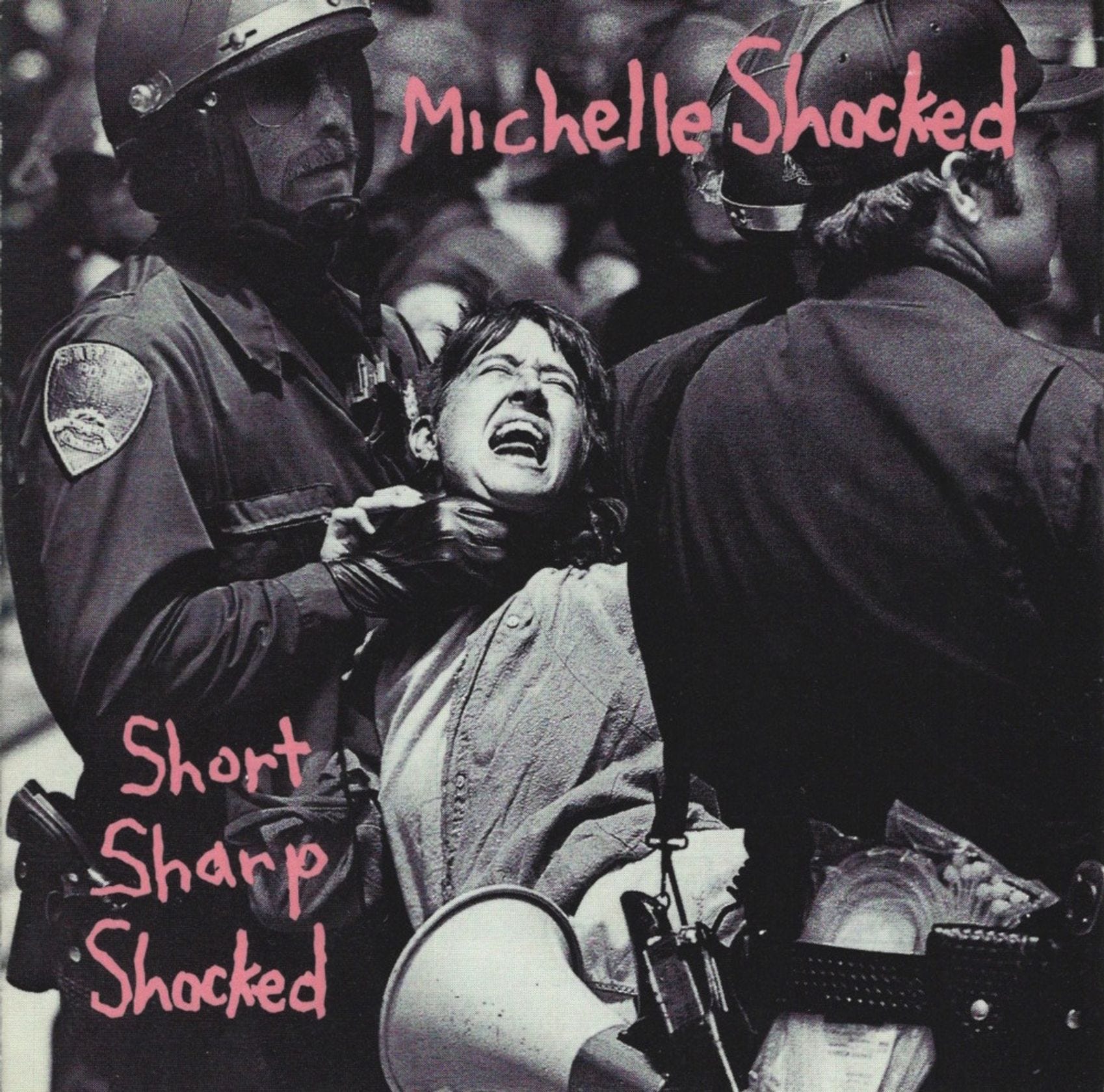
Shocked isn’t alone in her self-contradictory blend of traditional folk and post-punk. A growing group of similarly postured young urban folkies has sprung up on New York’s Lower East Side — singer-songwriters who, five years ago, broke the umbilical cord that had connected them to the long-dead 1960s Greenwich Village folk scene. Among this group are Lach (pronounced “latch”), the scene’s prime organizer and a songwriter in his own right; self-defined “folkgrass” singer Roger Manning; Long Island native Kirk Kelly; and California-bred Cindy Lee Berryhill. You could call this new species of folkies neo-bohemians: they rap like Jack Kerouac (”we’re real gone, baby; like beat, ya know...”); perform like Woody Guthrie (acoustic guitar, harmonica, wailing vocals); and dress like Stiv Bators (tight black jeans, black belts with silver studs, black combat boots, black leather jackets, black, black and more black). They fight the growing gentrification of their neighborhood, their motto is “Go Man Go,” and they’ve pigeonholed their new musical habitat “antifolk.”
It would be easy to blame R.E.M. for this growing fascination with folk (why not? They’re blamed for everything else these days), and the Athens band may well have generated a new interest in roots ’n’ roll music. More likely, though, it was Suzanne Vega’s early success that helped spark this new folk revival. Although Vega wasn’t actually part of this Lower East Side gang, her rise to the pop music pantheon with “Luka” produced something of a domino effect: PolyGram signed Shocked, Rhino nabbed Berryhill, and the punk label SST captured Kelly and Manning. But this group is grittier than Vega — and less polished than Boston’s Tracy Chapman, this year’s folkie whose self-titled Elektra debut has climbed to the top of the charts.
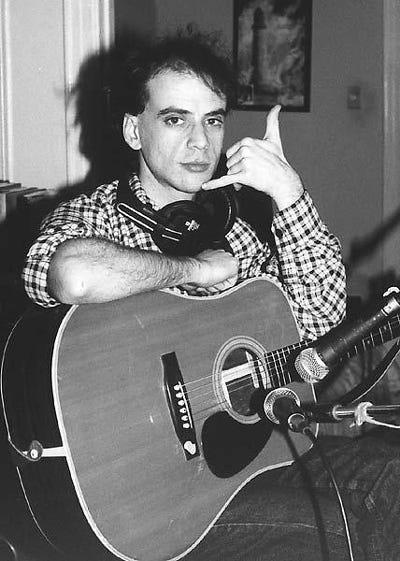
IT’S EARLY EVENING, and Lach is preparing the lineup for tomorrow night’s hootenanny at the Chameleon club on 6th Street between avenues A and B, an event he calls Lach’s Lair. He’s the backbone of this new generation of East Village folkies, musicians who were cast away from the tired West Village scene simply because their aggressive songs teeter on the tightwire between the two musical worlds they grew out of — that of Bob Dylan and Phil Ochs, and that of the Ramones and the Clash. Lach provided the first Lower East Side performance space that dared to cater, he says, to “anybody who wanted to be heard.”
The antifolk movement began, improbably enough, when Lach got kicked out of his Greenwich Village apartment. He’d already been functionally banned from most of the legendary folk clubs, such as Folk City and the newer Speakeasy. “The rebellion just grew and grew,” he says. “I was living on the west side, on Bleecker and MacDougal, in an illegal sublet at the time.” It seemed an appropriate abode for Lach, considering that very corner was the geographical heart of the ’60s folk scene. “So, these were my local clubs,” he says. “And I stayed with it for a while, but it just wasn’t happening. We’d get up there and play our songs loud and fast, and they just put a lock on us.” It was hinted to some of Lach’s mates that if they continued fraternizing with him, they’d be barred, too. He shakes his head. “It was crazy, the amount of backbiting and incest going on.”
Their aggressive songs teeter on the tightwire between the two musical worlds they grew out of — that of Bob Dylan and Phil Ochs, and that of the Ramones and the Clash.
So Lach scoured the real estate pages of the Village Voice and found a 700-square-foot loft space on Rivington Street on the east side — for $600 a month. He moved in, built a stage in the middle, and added a small bar at the back. Every weekend, the Hidden Fortress shook with Ramones-charged yet traditional-inspired folk songs. From 11 p.m. until dawn, people would play solo, en masse, a cappella — whatever. “We’d play all night, just whenever the party ended,” Lach recalls. The storefront after-hours club eventually became known simply as The Fort. “It was totally illegal,” Lach admits, “but what’s legal in New York?” Not only was the club illegal, but it was also on what the New York Daily News had recently rated as the most dangerous block in Manhattan — the lowest of the Lower East Side. “Yet we were packing it every weekend,” he says. “And these guys at Folk City were talking about not making enough money from folk music to stay alive.”
The Fort finally faded, but Lach’s Lair at the Chameleon club has carried on the same free-for-all tradition. And the crowds are growing. Lach always performs a song or two of his own, such as his alliterative, Phil Ochs-styled “Positions of Power,” the whiny “John Glenn Song” (“I wanna be an astronaut. I wanna fly through space…”), and his partially syncopated, reggae-influenced “Poet Strike.” On some nights, you’ll catch Manning or Kelly or Berryhill there, and there’s always scads of new kids on the folk-music block.
Lach scribbles a few names on a scrap of notebook paper, peers through thick-rimmed black glasses, and grins. “I always wait till Friday to get my shit together for the Lair,” he says, wiping small beads of sweat off his brow.
But are Lach and company just a coterie of young copycats trying to revive the music of two bygone generations — that of the ’60s Village folk scene and that of the mid-’70s punk/new wave movement pioneered at CBGB? Or are they a genuine musical force, harvesting new alternative music from traditional roots?
“What’s not derivative in some way?” asks Roger Manning, whose self-titled SST debut gracefully juxtaposes hard-strummed, rootsy songs with softer, fingerpicked bluegrass-inspired tunes. “Folk, punk, bluegrass — I like to call what I do ‘folkgrass,’” he says. But there’s something that distinguishes Manning from both Bob Dylan and Bill Monroe. The LP has all the flavor of Manning’s “folkgrass” influences plus lightning-speed, Sex Pistols-like chord changes that charge each verse of songs like “The Lefty Rhetoric Blues,” in which Manning sarcastically mocks and then skeptically acknowledges old leftists and their oversimplified political rhetoric.
“They gotta be fools to think they can get a sympathetic ear here,” Manning chides, as his fast, rhythmic acoustic chops flutter away chaotically at the ends of each verse. “Lefty folksinger rhetoric has such a boring ring. / They make me sick. / It’s either ‘no more bombs’ or ‘no more nukes.’ / But then, on the other hand, they were right about Vietnam…”
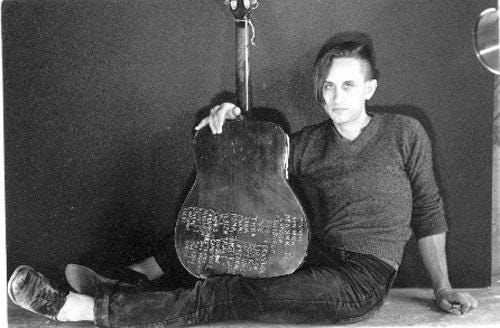
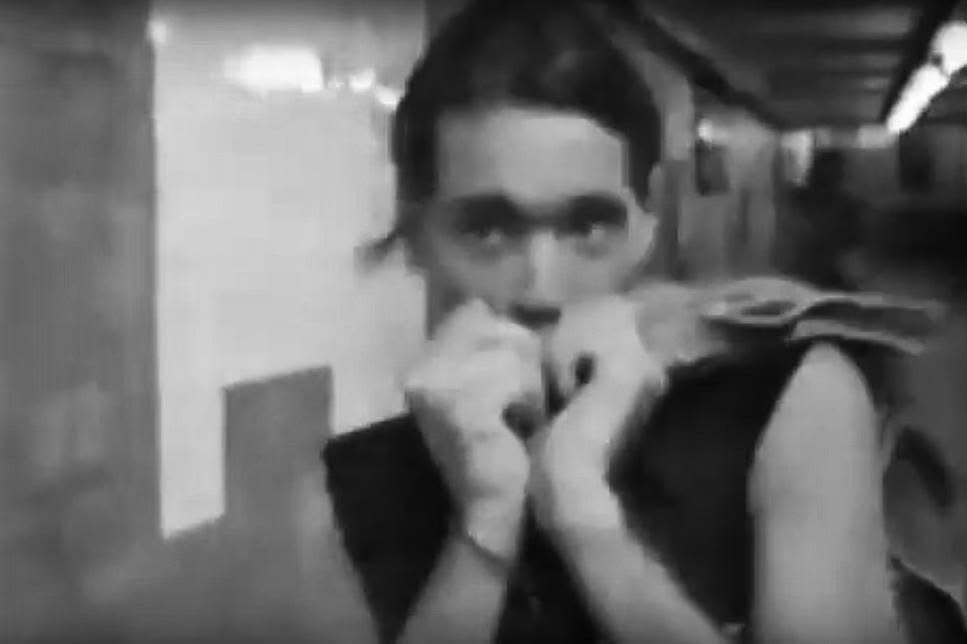
Manning debuts such tunes in New York’s screeching, oven-hot subway stations. The slender, dreamy-eyed singer straps on his battered Yamaha acoustic guitar and sings songs of protest and lost love in a carefree tenor voice that alternately wails and talks. He sings to the myriad of people who pace the filthy platforms, waiting for trains to Wall Street, SoHo, Chelsea, or Harlem. He doesn’t play for the money — you don’t make that much in the subways — but for kicks.
“You know, down there, people really listen,” he says. “I mean, this is New York City, and down in the subway, I’m racially in the minority most of the time. Yet most of the folks, no matter what persuasion they come from, will listen to me…” — assuming a train isn’t thundering by.
In “The West Valley Blues,” Manning scorns “a new generation of racist fools.” And like his folksinger predecessors dating back to the turn of the century, he’ll drop names of friends — Shocked (“Pearly Blues”), his labelmate Kelly (“The #14 Blues”), and Berryhill (“The Strange Little Blues”) — into his talking-blues songs.
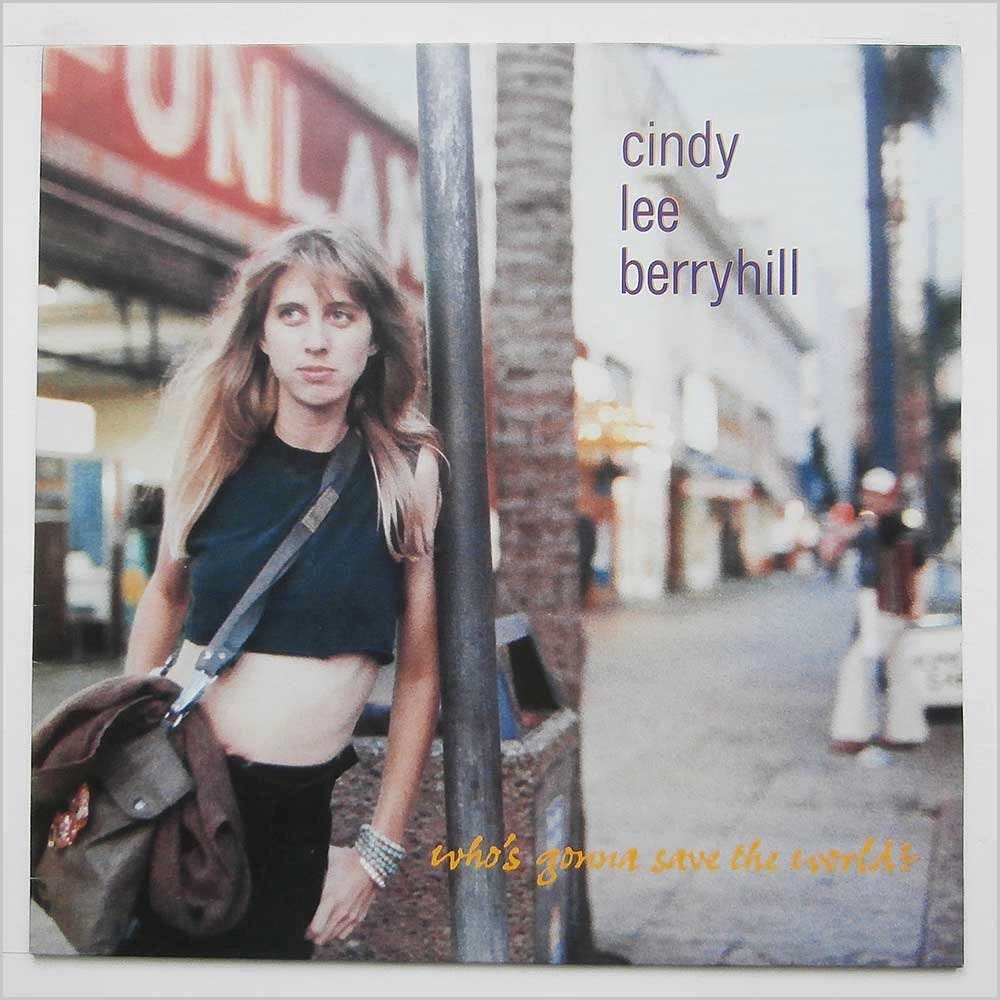
IF IT’S EARLY EVENING in New York, it’s mid-afternoon in San Diego, where Berryhill, who pointedly defines herself as a “New York musician,” is likely strumming her Yamaha and wishing she was back on the East Coast. On her 1987 debut, Who’s Gonna Save the World?, Berryhill sings subtly feminist tunes in a playfully adolescent voice. In “Damn, Wish I Was A Man,” she sarcastically yodels the title. At other times, though, she unleashes stream-of-consciousness expressions more in the style of Patti Smith or Sinead O’Connor. Onstage, the blond Californian tends more often to lilt freely about lost friends, garage band meetings, or the atrocities of Reagan-era politics. [Ed. note: Months after this story ran, Berryhill’s second album, Naked Movie Star, would feature a new protest song in which she presciently excoriated the man who would somehow become president 27 years later: NYC real estate tycoon“Trump.”]
Who’s Gonna Save the World? has its share of clever speed-poetry phrasing. “Whatever Works” begins in a jive, talking-blues style, Berryhill chiding folks who calculatedly write songs in posh skyscraper offices. And in “Looking Through Portholes,” which has a catchy Ian and Sylvia-like pop refrain, she sings of “old ghosts and Chagall shapes, beat subterranean haunts, long gone daddies…” The record’s Velvet Underground/Patti Smith-like dirge is “Steve On H,” a long, hard, piercing piece in which Berryhill muses on drug addiction. The song begins with her flighty voice sounding innocent, but climaxes in a vocal frenzy, encompassing the styles of both Smith and Kate Bush along the way.
However New York Berryhill would like to think she is, the LP still has a clearly California feel, though with heavy touches of East Coast consternation. It’s a tapestry of ironic humor and devastation. “I’d be sexy with a belly like Jack Nicholson,” she sings in “Damn, Wish I Was a Man,” and then a fretless bass mimics the sound of a beer gut (booooOOOOOOoooom). “She Had Everything” is a steady-paced, bass-heavy, and ironically pop-like tune about a suburban friend who’d killed herself for obviously unstated reasons. “She had a Cadillac car, thought she’d go far, real smart…”
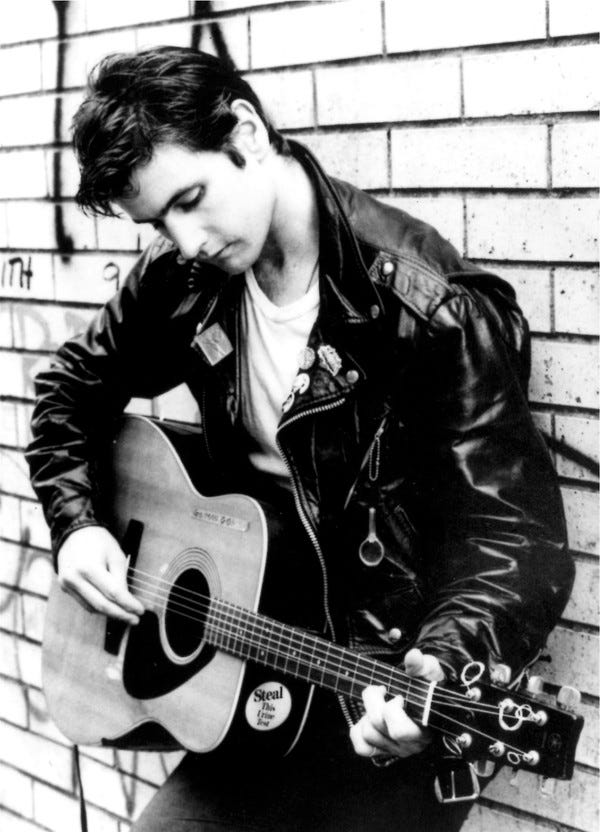
BACK IN NEW YORK, it’s still around dinnertime, and Kirk Kelly — who rarely goes out dressed in anything but faded black jeans, a flimsy white T-shirt, and a secondhand gray vest emblazoned with a button bearing the face of his hero, Phil Ochs — is also sitting alone, tuning his Yamaha. Kelly’s preparing for the benefit concert he’ll do on Saturday along with Shocked. He’ll perform his rapid-fire political anthem “Working in the Vineyards,” in which the song’s protagonist “puts in an honest day’s work for half a day’s pay.” Chances are, Kelly’ll also do his nasal-voiced ode to Ochs and others who’ve influenced his life and music. In a slow, steady tempo, he strums the chords and asks, “Who’ll be the Heroes of Tomorrow?” Not surprisingly, the song is stylistically very similar to Ochs’ own “A Toast to Those Who Are Gone.”
It makes sense that Kelly’s songs would sometimes mimic Ochs’ in style, politics, and verve. Unlike most of the others in the antifolk family, Kelly came to folk music via folk music itself — not via the Sex Pistols or Ramones. His family home had bins full of old Irish music, so when Kelly received his first Dylan record, it was an easy transition to songs of social justice. Writing labor-organizing anthems like “Working in the Vineyard” came naturally. “I just sat and listened to that first Dylan record I got,” he says. “I mean, I’d heard the same sort of stuff on those old Irish records.”
Kelly is aggressive onstage; he injects squalling, Dylanesque harmonica into most of his material, and during a live performance at CBGB once, he pounded so hard on his guitar that he broke three strings during just one song. The tune was “Go Man Go,” the title track of his recent SST debut, in which he shouts in a scratchy voice, “Don’t look back!” (Another Dylanism, perhaps?) In the wry “Red Blues,” he bangs out the song’s three chords and screams sarcastically, “I don’t wanna be no Communist / Those damn liberals get me really pissed / Don’t they know we could be next? / I don’t wanna be no Communist.” Then, he utters, “Take it away boys” — the “boys” being himself and his own mouth harp. Go Man Go was produced by Brian Ritchie of the Violent Femmes, punk’s first set of crossover folkies. Ritchie also plays acoustic bass on one song.
During the mid-’80s, while Kelly, Manning, Lach, and the others in New York were bemoaning the West Village old-timers club, Shocked and Berryhill had wandered on to the scene separately and serendipitously. Berryhill breezed into town searching for people to share ideas with. “Lach had started those Fort nights before I got to New York,” she says, “but when I got here, he’d quit doing them.” Berryhill’s upcoming second album on Rhino [Ed. note: the aforementioned Naked Movie Star] will be produced in New York by former Patti Smith guitarist Lenny Kaye, who also produced Suzanne Vega’s two albums. “I persuaded Lach to start the Fort up again, and then I decided we should all get together — all of us who were being shunned by those West Village people; all of us who were wearing combat boots and playing acoustic guitars; all of us who had grown up with the Buzzcocks and the Clash — and do an antifolk festival.”
She never expected to stay in New York for more than a week or so. “But when I met those guys, and this whole group of people with all this spirit, I knew this was where I was supposed to be,” she says. “God, I remember times when we’d sit around all night long and sing and trade songs and talk about Phil Ochs; talk about putting together a magazine and not having to rely on that burned-out, boring West Village scene — talking about, ‘We can make our own scene!’”
God, I remember times when we’d sit around all night long and sing and trade songs and talk about Phil Ochs. — Cindy Lee Berryhill
Shocked moved to the area in search of that same communal atmosphere — freedom of expression, a politically active community, and diversity — but she felt caught between two groups. “Here, I’d spend half my time at the Fort and half my time at CBGB’s with the skateboarding hardcores,” Shocked says. “Having been among the hardcore and acoustic scenes in Austin, I had much higher standards of politics than the (East Village) ‘boys’ club’ did.” That “boys’ club” — with “boys” such as Berryhill, Sarah Hauser (a performance artist/folk rapper), and Kristen Johnson (publisher of X-posure fanzine, the contemporary equivalent of popular ’60s folkzines such as Sing Out! or Broadside) would likely differ with Shocked’s characterization of the scene. Nevertheless, after her 1986 release, Shocked became something of a troop leader for the antifolkies.
Though now nominally based in London, Shocked still considers herself a part of the Lower East Side antifolk scene, although she does more traveling than remaining settled anywhere. In addition to Austin and New York, she’s lived among squatters in San Francisco. In Amsterdam, she was homeless and free, which inspired “5 A.M. In Amsterdam,” a beautiful, soaring tune on Campfire Tapes fueled by crisp fingerpicking and lyrics about the simplicity of “living alone,” not dependent upon telling time via wristwatches, but by observing nature and listening to the rings of distant church bells. As the Campfire record spins, you can actually hear crickets chirping in the background. Although Shocked’s roots lie in the rural South, she switches easily to the urban-folk mold. On “Graffiti Limbo,” from Short Sharp Shocked, she sings of a young Black man who was strangled by New York City transit cops simply for spray-painting art on the city’s putrid subway station walls.
“I remember first seeing Lach perform at Folk City before it closed,” Shocked says. She’s sitting back in a rickety chair at a Greenwich Village restaurant only a stone’s throw from Washington Square Park, where a quarter-century earlier, Dylan and Ochs would play for free. “Then I actually met Lach at Speakeasy. His energy was so different from most of the crap that went through there — I mean, Lach actually had energy.”
AS THE SUN SLOWLY RISES above a jagged East Village skyscape, Roger Manning is still awake. Sitting on a stoop on 11th Street and 2nd Avenue, he strums, in minor chords, the melody of a bitter song he wrote about sex and love and relationships in the urban America of the 1980s. Four of his friends sit cross-legged around him. Manning begins “The #17 Blues,” a Lou Reed-like talking-blues song, although in a softer, folkier manner than Lou would do it. “Jimmy says, ‘I don’t want no girl that wears leather like that,’” Manning sings, nonchalantly. “Me, I don’t care, so long as she don’t smoke while I’m sleeping.”
The front page of a New York Times tumbles by on the sparkling sidewalk and the song fades into the black. “Guess it’s time to hit it,” Manning suggests in a whisper. And the faithful, five-strong group of late-night folkie stalwarts nod in approval. After a few murmured farewells, they disperse into the foggy New York Sunday morning. They all have to get at least some rest because later in the evening, there’s gonna be another hootenanny on Houston Street.
20 Antifolk Songs: From Lach, Berryhill, Manning, and Kelly to Beck and beyond.
On his debut album of 1988, Kirk Kelly asked in one song, “Who’ll be the heroes of tomorrow?” In the more than three decades since the birth of the antifolk movement, numerous artists have stepped up to answer his question. Below is a playlist featuring a few of them, including most of the originals mentioned in this story.
Watch the promotional reel for Berryhill’s Who’s Gonna Save the World?
I was there… performed with my duo/band the Girl Scouts- then as a solo performer at the earliest iteration of the Fort and then later at Chameleon, sophies etc. The style of my work didn’t fall under the category of anti folk, though I participated in many anti folk shows. I combined elements of poetry, rap, singing, different characters and props. And went on to book and coordinate shows at Knitting Factory, Lismar Lounge and CBGB canteen. Major props to Lach and others for creating opportunities for personal like me who were way out of the mainstream. Btw i first saw Michelle Shocked when she would hang around on the side at the open mics st speakeasy and folk city. She didn’t perform initially, would just quietly play a little violin on the side here and there.
In the early 2000s, around LES and EV, I got into the anti-folk band Joie Dead Blond Girlfriend. I think they are in LA now.